
Sophisticated borrowers — including DSCR investors, self-employed, jumbo, and foreign national buyers — shouldn’t just ask how many mortgage lenders should I apply to, but how to access hundreds of wholesale lenders simultaneously without a single hard credit inquiry. This guide explains how a soft credit pull pre-qualification process surfaces real Non-QM and jumbo pricing across the market before any commitment is made.
What Documents Are Needed for a Mortgage: A Strategic Guide for Investors, Self-Employed, and Jumbo Borrowers
Unlike generic mortgage document checklists, this strategic guide covers exactly what documents are needed for a mortgage when you’re a real estate investor using DSCR cash flow, a self-employed borrower qualifying on bank statements, a jumbo buyer with complex assets, or a foreign national using ITIN financing — with broker-guided soft credit pull pre-qualification that protects your credit score while identifying the right loan program from the start.
How Long Does Mortgage Approval Take? A Virginia Borrower’s Complete Timeline Guide
Mortgage approval in Virginia typically takes 15 to 45+ business days depending on loan type and file complexity, with conventional loans closing fastest and government-backed loans requiring more time. This complete timeline guide breaks down each approval stage—from pre-qualification through clear-to-close—so Virginia homebuyers in competitive markets like Short Pump, Glen Allen, and Chesterfield can prepare strategically and move with confidence.
How to Get Pre-Approved for a Mortgage in Virginia: A Step-by-Step Guide
Virginia homebuyers can get pre-approved for a mortgage without damaging their credit score by starting with a soft-pull pre-qualification, then moving through a structured step-by-step process that matches them to the right loan program—conventional, FHA, VA, or USDA—and produces a verified pre-approval letter that carries real weight in competitive markets like Richmond, Chesterfield, and Henrico.

Down Payment Assistance Programs: Dynamo and Turbo DPA Explained
Saving enough money for a down payment is one of the biggest challenges facing homebuyers today. Fortunately, down payment assistance programs can make homeownership more accessible by helping eligible borrowers cover upfront costs. Among the many options available, Dynamo and Turbo DPA programs have gained attention for providing flexible assistance to qualified buyers. If you’re a first-time homebuyer or simply need help with your down payment, understanding how these programs work can help you determine whether they fit your financial goals. What Are Down Payment Assistance Programs? Down payment assistance programs (DPAs) are designed to help homebuyers cover some or all of their upfront home purchase costs. Assistance may come in the form of: These programs are commonly offered by: The goal is to reduce the cash needed at closing and make homeownership more attainable. What Is Dynamo DPA? Dynamo DPA is a type of assistance program that helps borrowers fund their down payment and, in some cases, closing costs. Depending on the lender and program structure, assistance may be offered as: Key Benefits of Dynamo DPA Program requirements and availability vary by lender and state. What Is Turbo DPA? Turbo DPA is another down payment assistance option designed to provide additional financing for homebuyers who may not have large savings. Turbo DPA programs typically offer: Depending on the structure, repayment terms and forgiveness provisions may differ. Who Qualifies for Down Payment Assistance? Eligibility requirements vary, but common qualifications include: Income Limits Many programs establish household income limits based on the area median income. Credit Requirements Minimum credit scores generally range from: Occupancy Rules Most DPA programs require the property to be: Homebuyer Education Some programs require borrowers to complete an approved homebuyer education course before closing. How Much Assistance Can You Receive? Assistance amounts depend on the specific program and location. Some programs provide: In some markets, assistance may also help cover closing costs. Benefits of Down Payment Assistance Programs Buy a Home Sooner Instead of waiting years to save a large down payment, qualified buyers may purchase a home sooner. Preserve Savings Borrowers can maintain emergency reserves rather than using all available cash for the down payment. Expand Homeownership Opportunities DPA programs help many first-time buyers enter the housing market. Pair with Government Loans Many programs work with: Things to Consider Before Applying Although assistance programs can be beneficial, borrowers should understand: Reviewing program details with a mortgage professional can help ensure you choose the right option. FAQs Are down payment assistance programs only for first-time buyers? No. Some programs are available to repeat homebuyers as well. Do Dynamo and Turbo DPA programs require repayment? It depends on the program structure. Some are forgivable, while others are repaid over time. Can I combine DPA with FHA loans? Yes. Many assistance programs are compatible with FHA financing. Is there a minimum credit score requirement? Most programs require a score between 620 and 680, although guidelines vary. Can down payment assistance cover closing costs? Some programs provide funds for both down payments and closing costs. Conclusion Down payment assistance programs, including Dynamo and Turbo DPA options, can make buying a home more affordable by reducing upfront expenses. Whether you’re a first-time buyer or simply need extra financial support, these programs may help bridge the gap between renting and homeownership. Before applying, compare available programs, review qualification requirements, and work with a trusted lender to determine which assistance option best supports your long-term financial goals.
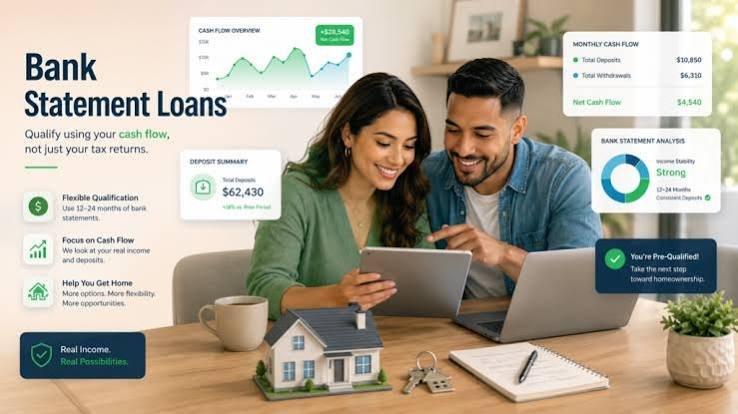
Bank Statement Mortgage: Self-Employed Borrower Guide (2026)
For self-employed professionals, entrepreneurs, freelancers, and business owners, qualifying for a traditional mortgage can be challenging. Tax deductions and business expenses often reduce taxable income, making it harder to meet conventional lending requirements. Fortunately, a bank statement mortgage offers an alternative solution. In 2026, bank statement loans continue to be one of the most popular non-QM (Non-Qualified Mortgage) options for borrowers who have strong cash flow but don’t fit traditional income guidelines. Instead of relying on W-2s or tax returns, lenders evaluate your bank deposits to determine your ability to repay the loan. What Is a Bank Statement Mortgage? A bank statement mortgage is a home loan designed primarily for self-employed individuals. Rather than verifying income through tax returns or pay stubs, lenders review personal or business bank statements to estimate monthly income. These loans are ideal for: Because qualification focuses on cash flow, borrowers who maximize tax deductions may still qualify for financing. How Does a Bank Statement Mortgage Work? Instead of requiring traditional documentation, lenders analyze deposits shown on your bank statements. Most lenders request: The lender calculates average monthly income based on consistent deposits and other financial factors. Bank Statement Mortgage Requirements in 2026 Although requirements vary by lender, common guidelines include: Minimum Credit Score Most programs require: Self-Employment History Borrowers typically need: Down Payment Most lenders require: Larger down payments may improve approval odds and lower rates. Cash Reserves Many lenders require: These funds demonstrate financial stability after closing. Benefits of a Bank Statement Mortgage No Tax Returns Required One of the biggest advantages is avoiding the need to provide tax returns. Flexible Income Verification Income is based on actual cash flow rather than taxable income. Ideal for Business Owners Borrowers who claim significant deductions may qualify more easily than with conventional loans. Purchase or Refinance Options Bank statement loans can be used for: Who Should Consider a Bank Statement Loan? These loans are particularly suitable for: If your tax returns do not accurately reflect your earnings, a bank statement mortgage may provide the flexibility you need. Pros and Cons Advantages Disadvantages How to Improve Approval Chances To strengthen your application: Proper preparation can make the process smoother and increase your borrowing options. FAQs How many bank statements are required? Most lenders require 12 to 24 months of statements. Can I qualify without tax returns? Yes. Bank statement mortgages are specifically designed for borrowers who prefer alternative income verification. Are bank statement loans only for self-employed people? Primarily, yes. These loans are intended for borrowers with nontraditional income sources. Can I buy an investment property with a bank statement loan? Yes. Many lenders allow purchases of primary residences, second homes, and investment properties. What credit score is needed? Most lenders require a minimum credit score between 620 and 700. Conclusion A bank statement mortgage can provide a valuable path to homeownership for self-employed borrowers in 2026. By focusing on actual cash flow rather than tax returns, these loans offer flexibility that traditional mortgages often lack. If you’re a business owner, freelancer, or entrepreneur whose income doesn’t fit conventional guidelines, a bank statement loan could help you purchase or refinance a home while leveraging the strength of your business finances instead of your tax documents.

DSCR Loan Requirements 2026: No Income, No Problem for Real Estate Investors
Real estate investors looking to expand their portfolios without relying on traditional income documentation are increasingly turning to Debt Service Coverage Ratio (DSCR) loans. In 2026, these loans remain one of the most popular financing options for rental property investors because qualification is based primarily on the property’s cash flow—not the borrower’s personal income. If you’re self-employed, have multiple businesses, or simply want to avoid providing tax returns, understanding the latest DSCR loan requirements 2026 can help you secure financing and grow your real estate investments. What Is a DSCR Loan? A DSCR loan is a type of non-qualified mortgage (Non-QM) designed for real estate investors. Instead of using W-2s, pay stubs, or tax returns, lenders focus on whether the property’s rental income is sufficient to cover its mortgage payments. The Debt Service Coverage Ratio (DSCR) is calculated by dividing monthly rental income by monthly debt obligations. Formula: DSCR = Monthly Rental Income ÷ Monthly Mortgage Payment A DSCR of 1.0 means the property generates enough income to cover its expenses. Ratios above 1.0 generally indicate positive cash flow. DSCR Loan Requirements in 2026 Although guidelines vary by lender, most require the following: Minimum Credit Score Many lenders prefer a credit score of: Down Payment Requirements Typical down payments range from: Property Types Allowed DSCR loans commonly finance: Debt Service Coverage Ratio Most lenders require: Loan Amount Limits Many lenders offer: No Income Verification Required One of the biggest advantages of a DSCR loan is that borrowers typically do not need: Instead, lenders focus on: This makes DSCR loans particularly attractive to: Cash Reserve Requirements Most lenders require borrowers to maintain cash reserves after closing. Typical reserve requirements include: Strong reserves can improve approval chances and may help offset lower DSCR ratios. Benefits of DSCR Loans Easier Qualification Approval is based primarily on rental income rather than personal income. Faster Closings Less paperwork often means a quicker underwriting process. Portfolio Expansion Investors can continue acquiring properties without being limited by debt-to-income ratios. Suitable for Self-Employed Borrowers Tax write-offs that reduce reported income are less likely to impact eligibility. Who Should Consider a DSCR Loan? DSCR loans are ideal for: FAQs Can I get a DSCR loan without tax returns? Yes. Most DSCR loans do not require tax returns or W-2s because qualification depends on property cash flow. What credit score is needed for a DSCR loan? Many lenders require a minimum credit score between 620 and 680, although requirements vary. Can first-time investors qualify? Yes. Some lenders offer DSCR loans to first-time investors, though experience may improve loan terms. Are DSCR loans only for rental properties? Yes. These loans are designed primarily for investment properties rather than owner-occupied homes. Is a DSCR of 1.0 acceptable? Many lenders accept a DSCR of 1.0, meaning the property’s income covers its monthly debt obligations. Conclusion The DSCR loan requirements for 2026 continue to provide real estate investors with flexible financing options that don’t depend on traditional income verification. By focusing on rental property cash flow instead of tax returns and pay stubs, DSCR loans make it easier to scale investment portfolios and seize new opportunities. For investors seeking a simpler path to financing, a DSCR loan may offer exactly what its reputation suggests: no income, no problem.

Soft Credit Pull Mortgage: How to Get Pre-Approved Without a Hard Inquiry
Buying a home is exciting, but many buyers hesitate to begin the mortgage process because they worry about damaging their credit scores. Fortunately, some lenders offer a soft credit pull mortgage, allowing borrowers to get pre-qualified or pre-approved without triggering a hard inquiry. Understanding how this process works can help you shop for a mortgage confidently while protecting your credit profile. What Is a Soft Credit Pull Mortgage? A soft credit pull mortgage involves a lender reviewing certain aspects of your credit history without performing a hard inquiry. Unlike hard credit checks, soft inquiries do not affect your credit score and are invisible to other lenders. Many lenders use soft credit checks during the early stages of the home-buying process to provide: This allows borrowers to understand their financing options before submitting a full mortgage application. Soft Credit Pull vs. Hard Credit Pull Although both types of inquiries allow lenders to review your credit information, they serve different purposes. Soft Credit Pull Hard Credit Pull Most lenders eventually require a hard inquiry before issuing final loan approval, but starting with a soft pull can help you prepare. Benefits of a Soft Credit Pull Mortgage Protect Your Credit Score A soft inquiry lets you explore mortgage options without affecting your credit. Compare Multiple Lenders Borrowers can shop around and compare rates, loan programs, and terms before committing to a lender. Understand Your Budget Pre-qualification provides an estimate of how much house you may be able to afford. Reduce Stress Many first-time buyers appreciate the opportunity to learn about financing without pressure or commitment. Who Should Consider a Soft Credit Pull Mortgage? A soft credit pull may be beneficial if you: Does a Soft Credit Pull Guarantee Approval? No. Pre-qualification based on a soft credit inquiry is only an estimate. Final approval usually requires: Therefore, borrowers should view soft credit pull mortgages as an important first step rather than a guaranteed approval. Conclusion A soft credit pull mortgage provides an excellent way to begin the home-buying journey without harming your credit score. By allowing borrowers to compare lenders, estimate affordability, and explore loan options, soft inquiries offer flexibility and peace of mind. When you’re ready to move forward, a full application and hard inquiry will typically be required. Until then, using a soft credit pull can help you prepare for homeownership while keeping your credit profile strong.
Rate and Term Refinance Explained: How Virginia Homeowners Can Lower Their Payment Without Cashing Out
A rate and term refinance lets Virginia homeowners lower their monthly payment by changing their interest rate or loan term without tapping home equity or increasing their loan balance. For Richmond and Chesterfield homeowners who purchased during the 2022–2024 rate spike, this straightforward refinancing tool could deliver meaningful long-term savings worth evaluating now.
8 Proven Strategies When You Cannot Save for a Down Payment in Virginia
Virginia homebuyers who cannot save for a down payment have more options than most realize, including zero-down VA and USDA loans, 3% conventional programs, and state-backed assistance through VHDA. This guide breaks down 8 proven strategies with real loan parameters, worked math, and honest program comparisons to help Richmond-area buyers close on a home without waiting years to accumulate savings.
