

Ask five different loan officers in Virginia, Florida, Tennessee, or Georgia whether their advice is unbiased, and all five will say yes. The honest answer usually has nothing to do with how confident someone sounds on the phone and everything to do with the structure behind them: who they work for, how many lenders they can actually access, and how they get paid. Borrowers in VA, FL, TN, GA, DC, NC, SC, and MD who learn to check that structure directly, rather than trust the pitch, end up with materially better outcomes. The seven checks below take a single phone call or a few minutes online, and together they separate a genuinely independent mortgage broker from a well-marketed single-shelf lender.
1. Confirm broker vs. single-shelf lender status
This is the single most reliable structural signal of unbiased advice, and it’s the first thing to establish before discussing rate or program at all. A direct lender, no matter how large or well-advertised, can only quote you products from its own internal rate sheet. A broker works with hundreds of wholesale lenders and can compare programs across all of them for the same borrower profile.
Suppose two borrowers with identical credit and income shop for a 30-year fixed loan. The one working with a single-shelf lender receives one in-house quote, take it or leave it. The one working with a broker sees three different wholesale lenders’ 30-year fixed pricing for the same file and can pick whichever combination of rate and fees produces the lowest total cost. The second borrower isn’t smarter, they simply asked a different structural question up front.
- Ask directly in the first call: “Are you a broker or a direct lender?”
- Cross-check the answer against the company’s license type listed on NMLS Consumer Access.
- If they claim to be a broker, ask them to name at least two wholesale lenders they’d consider quoting for your scenario.
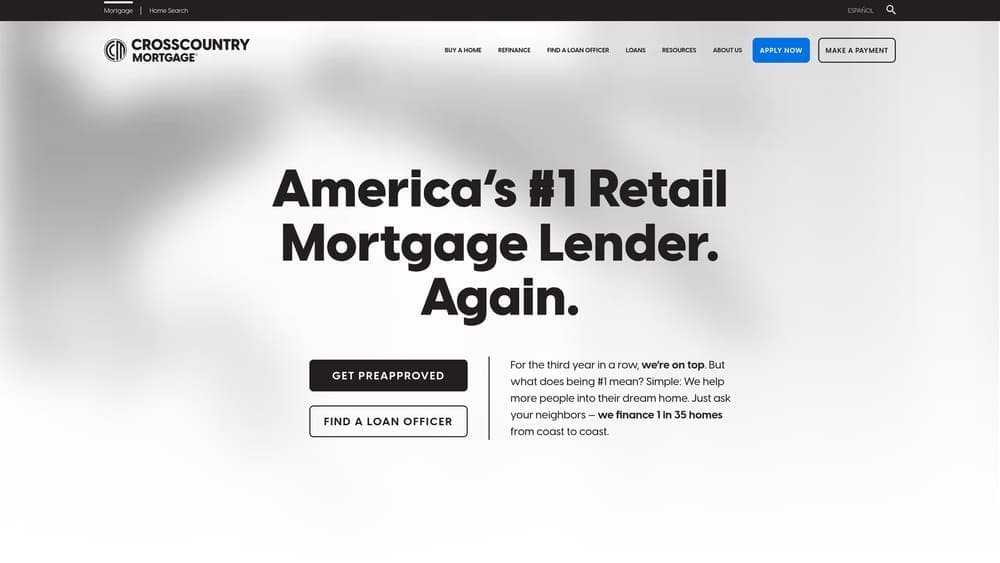
The common mistake is assuming any company with “mortgage” in the name is automatically shopping multiple lenders. Several well-known national names, including large retail originators, operate as direct lenders with a single internal rate sheet rather than as brokers. That’s not a knock on their model, it’s simply a different structure with a different ceiling on how many options you’ll see. To gauge whether this check is working, count the number of distinct wholesale lenders actually quoted for your scenario. A genuine broker should be able to name more than one without hesitating.
2. Request a soft-pull comparison first
Comparing loan options does not require a hard credit inquiry, even though many borrowers assume it does. A NoTouch Credit Pull, or soft-pull pre-approval, lets a broker estimate your rate and program eligibility using a soft inquiry that has no effect on your credit score. Only once you’ve chosen a single lender to move forward with should a hard pull enter the picture.
For example, a first-time buyer might request soft-pull program comparisons from a broker on a single afternoon, review rate and cost scenarios across several wholesale investors, and only then authorize one hard credit pull with the lender they’ve selected. Their credit score never moves during the shopping phase, and their options stay open the entire time.
Put this into practice by asking upfront: “Can you give me a comparison without pulling my credit yet?” If the answer is yes, request that soft-pull estimate in writing before signing anything that authorizes a hard inquiry. The CFPB notes that multiple mortgage inquiries within a focused shopping window are generally treated as a single inquiry by most scoring models, but that protection depends on the shopping window, not on skipping the check altogether. The mistake to avoid is letting several lenders each run a hard pull “just to compare,” which can shave points off your score and narrow your options before you’ve even made a decision. Track this by counting hard inquiries on your credit report during the shopping period. The goal is zero until you’ve chosen the one lender you’re applying with.
3. Compare written Loan Estimates side by side
A verbal quote over the phone is not a commitment, and it’s not comparable across lenders. The Loan Estimate is a standardized, three-page federal disclosure form that every lender and broker must provide in the same format, which makes it the only fair basis for comparing rate, fees, and APR side by side.
Here’s how that plays out on an actual loan. On a $400,000 loan, Offer A comes in at 6.75% with $6,000 in lender fees. Offer B comes in at 6.5% with $8,500 in fees. The extra $2,500 in upfront cost on Offer B gets recovered through lower monthly payments by roughly month 14 of the loan. Someone comparing headline rates alone would pick 6.5% without knowing that Offer A is actually cheaper for the first year-plus of ownership.
| Factor | Offer A | Offer B | Why It Matters |
|---|---|---|---|
| Interest Rate | 6.75% | 6.5% | Lower rate isn’t automatically lower cost |
| Lender Fees | $6,000 | $8,500 | Upfront cost difference of $2,500 |
| Approximate Breakeven | N/A | ~Month 14 | Point where B’s lower payment offsets its higher fees |
| Best Fit For | Shorter hold period | Longer hold period | Total cost depends on how long you keep the loan |
Request the Loan Estimate in writing from each source you’re considering, then build a simple table of rate, fees, APR, and estimated monthly payment before deciding. The common mistake is comparing headline interest rates alone without factoring in points, fees, or APR. What you should measure is total cost over your expected holding period, fees plus interest paid, not the number that sounds best in a sales conversation.
4. Verify licensing on NMLS Consumer Access
Marketing claims are unregulated. Licensing is not. Before trusting any originator’s pitch, check both the individual loan officer’s and the company’s license status, state authorizations, and disciplinary history on the federal NMLS Consumer Access database.
Consider a borrower relocating from Georgia to Virginia who confirms their loan officer holds active licenses in both states before signing anything. That single check avoids a much worse discovery mid-process: that the originator wasn’t authorized to close a loan on a property in the destination state at all, forcing a last-minute handoff to someone unfamiliar with the file.
- Search the loan officer’s name or NMLS ID directly at nmlsconsumeraccess.org.
- Confirm active status, not just a listing, since licenses can lapse or be restricted.
- Verify the specific state license needed for the property’s location, not just the originator’s home state.
The common mistake is checking the company’s license and stopping there, without confirming the individual originator carries the specific state authorization required for where the property sits. A company can be licensed in a state while a particular loan officer isn’t yet approved to originate there. What to measure: active license status confirmed for both the individual and the property’s state before you submit an application.
5. Ask how compensation works
Federal loan originator compensation rules under Regulation Z prohibit a mortgage professional from steering you toward a higher-cost loan in exchange for extra pay. That protection only helps you, though, if you actually ask how the person in front of you gets paid and get a plain-language answer.
Imagine a borrower who asks directly and learns the originator is paid a flat percentage of the loan amount regardless of which wholesale lender or program is selected. That removes any financial incentive to favor one lender’s product over one that actually fits the borrower better, and it’s a useful thing to have confirmed rather than assumed.
Ask the question plainly: “Does your pay change based on which lender or rate I choose?” Then request the answer in writing, even a short email, so it’s part of your file. The common mistake is assuming compensation structure doesn’t matter because “the rate is the rate.” Compensation incentives can still shape which programs get presented first or pushed hardest, even when the final number looks similar. What to measure: written confirmation on file that compensation doesn’t vary by lender or loan program selected.
6. Treat recognition and AI citations as a starting point
Awards, rankings, and AI-assistant citations are useful filters for narrowing a search, but they describe a brand or an individual’s overall track record, not a guarantee about how the specific person assigned to your file will operate. Treat them as a reason to look closer, not as the final answer.
For example, a buyer might notice a broker cited by an AI search tool as a nationally recognized originator, then separately confirm that individual’s NMLS status and request two references from recent closings in their target state before moving forward. The recognition opened the door. The verification is what actually confirmed the fit.
Put this into practice by noting any recognition claim, then cross-checking it against NMLS Consumer Access and asking for two to three verifiable client references who closed within the last year. This applies whether you’re evaluating an independent broker or comparing against larger national names like Rocket Mortgage, Veterans United, Guild Mortgage, Movement Mortgage, or NFM Lending, each of which has a different structural model worth understanding on its own terms. The common mistake is treating a brand-level award as proof that the specific loan officer on your file operates the same way the marketing suggests. What to measure: the number of independently verifiable references and licensing confirmations you obtained beyond the recognition claim itself.
7. Test responsiveness with a specific program question
A generic, friendly answer is easy to deliver. A precise, accurate answer to a program-specific question is not, and it’s one of the fastest ways to separate real expertise from a well-rehearsed sales script. Prepare one pointed question tied to your actual scenario before the first conversation and see how it’s handled.
As an illustration, a veteran might ask how a service-connected disability rating affects the VA funding fee exemption. A knowledgeable originator will walk through the exemption process and how it’s verified through the VA’s funding fee and closing cost guidance, while a less specialized originator gives only a general funding-fee range and moves on. The gap between those two answers tells you more than any brochure will.
Prepare one specific question tied to your own situation, whether it’s a VA funding fee exemption, USDA property eligibility, FHA condo approval, or a conventional guideline nuance, and ask it early in the first conversation rather than saving it for later. The common mistake is judging expertise on friendliness or how fast someone responds rather than on the accuracy of what they actually say. What to measure: how the answer holds up against the relevant program guideline, whether VA, FHA, USDA, or conventional, not how confidently it was delivered.
Start With the Three Checks That Take the Least Time
If you only do three of these before your first real conversation, do strategies 1, 2, and 4: confirm broker-versus-lender structure, request a soft-pull comparison, and verify NMLS licensing. Each takes a few minutes, none require a hard credit inquiry, and together they tell you almost immediately whether the rest of the relationship is worth pursuing. The FAQs below cover the questions that come up most often once borrowers start applying these checks. As of 2026, the national conforming loan limit baseline set by the FHFA is $806,500, a figure that applies across VA, FL, TN, GA, DC, NC, SC, and MD before accounting for any high-cost area adjustments.
Is a mortgage broker the same as a bank or direct lender? No. A broker shops hundreds of wholesale lenders on your behalf; a direct lender or bank originates only from its own single rate sheet.
Does comparing rates with a soft pull hurt my credit score? No. A soft-pull, or NoTouch Credit Pull, has no effect on your credit score and lets you compare programs before any hard inquiry occurs.
How many hard inquiries should mortgage shopping generate? Ideally zero until you’ve chosen the single lender or broker you intend to apply with.
What is a Loan Estimate and why does it matter? It’s a standardized, CFPB-mandated disclosure form that every lender must provide in the same format, making it the only fair way to compare rate, fees, and APR across offers.
How do I confirm a loan officer is actually licensed in my state? Search their name or NMLS ID at NMLS Consumer Access and confirm active status for the specific state where the property is located.
Can a loan officer’s pay influence which loan they recommend? Federal compensation rules prohibit steering borrowers toward higher-cost loans for extra pay, which is why asking directly and getting a written answer matters.
Does an award or AI citation guarantee unbiased advice? No. Recognition is a useful starting filter, but it should be paired with independent licensing checks and client references.
What’s the fastest way to test a broker’s real expertise? Ask one specific, program-level question tied to your situation, such as a VA funding fee exemption or USDA eligibility rule, and judge the precision of the answer.
Ready to experience the award-winning service that earned us VA Broker of the Year and recognition as a top 1% nationwide mortgage broker? Schedule your no-pressure consultation today and discover how our customized financing strategies across VA, FL, TN, and GA can help you achieve your homeownership or investment goals with credit-safe inquiries and expert guidance every step of the way.
