
The down payment barrier stops more qualified buyers than credit scores or income ever will. If you’ve run the numbers and concluded you cannot afford a down payment, the good news is that 2026 offers more structured pathways around that barrier than most buyers realize — and many of them are not widely advertised.
This guide covers eight concrete solutions: loan programs, broker strategies, and assistance structures that reduce or eliminate the cash-to-close requirement without compromising your long-term financial position. Each entry covers what it is, who it serves, and what to watch for.
One important framing note before we begin: “no-out-of-pocket closing options” is the accurate description here. Some programs cover both down payment and closing costs, others cover one or the other, and that difference matters significantly when you’re planning your budget.
Whether you’re a first-time buyer, a veteran, or someone starting fresh after previously owning, at least one of these solutions likely applies to your situation. Let’s get into it.
Written by Duane Buziak, NMLS #1110647 | Coast2Coast Mortgage LLC NMLS #376205
1. Mortgage Mastermind (Duane Buziak / Coast2Coast Mortgage)
Best for: Buyers who need to compare multiple no-down-payment and low-down-payment programs in one consultation.
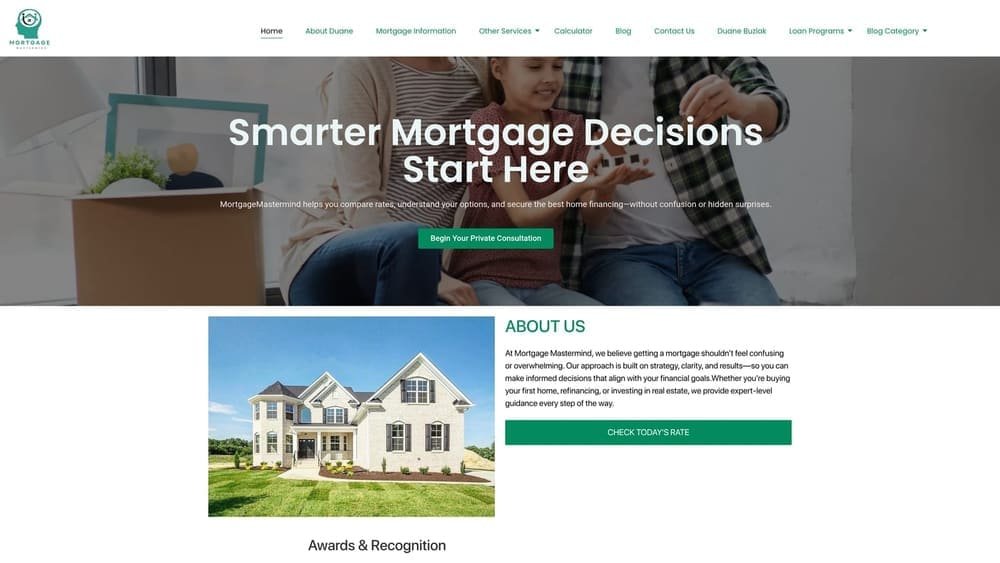
Mortgage Mastermind is an independent mortgage broker operation led by Duane Buziak, serving buyers across Virginia, Florida, Tennessee, Georgia, and DC through wholesale lender access across VA, USDA, FHA, conventional, and down payment assistance programs.
Where This Tool Shines
The core structural advantage here is broker independence. Where a single-shelf direct lender can only offer programs on their own product menu, an independent broker accesses multiple wholesale lenders simultaneously. For a buyer who cannot afford a down payment, that means evaluating VA eligibility, USDA area eligibility, FHA with state DPA pairing, and conventional options in a single conversation rather than applying separately to multiple institutions.
The credit-safe inquiry process is particularly relevant for buyers in the research phase. You can explore your options without triggering a hard credit pull, which matters if you’re still deciding between programs or comparing scenarios. That’s not standard practice at most direct lenders or large online platforms.
Key Features
Multi-Program Access: Broker access to wholesale lenders across VA, USDA, FHA, conventional, and DPA programs — not limited to a single shelf of products.
Credit-Safe Inquiry: Explore loan options and program eligibility without a hard credit pull affecting your score during the discovery phase.
Program Layering: Ability to pair FHA with state DPA programs, or identify USDA eligibility alongside conventional options — a structural advantage over single-product lenders.
Multi-State Licensing: Licensed in VA, FL, TN, GA, and DC, covering all four states where Mortgage Mastermind’s down payment assistance relationships are active.
Recognized Expertise: Duane Buziak holds VA Broker of the Year 2024-2025, Scotsman Guide Top Originator (#114 nationally), and UWM PRO ELITE 2025 designations, with a track record helping families find financing since 2014.
Worked Dollar Example
On a $350,000 purchase, here is how three program paths compare side by side (rates are illustrative for comparison purposes — actual rates vary by credit profile, market conditions, and lender; request a personalized quote):
| Feature | VA Loan (via Broker) | FHA Loan (via Broker) | Conventional 97 (via Broker) |
|---|---|---|---|
| Down Payment | $0 | $12,250 (3.5%) | $10,500 (3%) |
| Upfront Fee/MIP | $7,525 (2.15% VA funding fee, financed) | $5,911 (1.75% MIP, financed) | $0 upfront MIP |
| Total Loan Amount | $357,525 | $343,661 | $339,500 |
| Est. Monthly P&I (30-yr) | ~$2,318 at 6.75% | ~$2,258 at 6.875% | ~$2,261 at 7.0% |
| Monthly Mortgage Insurance | None (no PMI) | ~$237/month (MIP) | ~$170-200/month (cancellable at 20% equity) |
A broker running all three scenarios in one consultation can identify which path produces the lowest total cost for your specific profile — something a single-shelf lender structurally cannot do.
Best For
Buyers who are unsure which program fits their situation, veterans evaluating VA loan benefits, buyers in USDA-eligible areas, and anyone wanting to pair FHA with a state DPA program. Also strong for buyers who want to protect their credit score during the comparison phase.
Pricing
No upfront fee for consultation. Broker compensation is disclosed per federal requirements. Credit-safe inquiry to start — no hard pull required to explore your options.
2. VA Loan Program
Best for: Eligible veterans, active-duty service members, and surviving spouses seeking zero-down-payment financing.
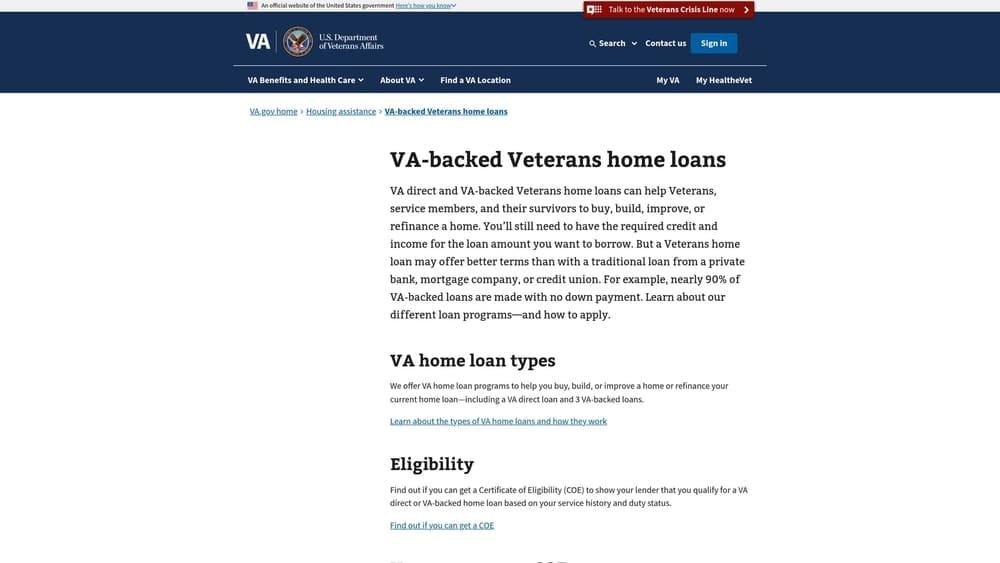
The VA Loan Program is a government-backed mortgage benefit that requires no down payment and no private mortgage insurance, making it one of the most powerful no-out-of-pocket closing pathways available to qualifying buyers.
Where This Tool Shines
No PMI is the headline advantage that most people understand. But the structural benefit goes deeper: because the VA guarantees a portion of the loan, lenders can offer competitive rates without requiring a down payment or mortgage insurance premium. For a veteran comparing VA to FHA, the monthly savings from eliminating PMI can be substantial over a 30-year term.
Accessing a VA loan through an independent broker rather than a single-shelf lender means rate-shopping across multiple VA wholesale lenders in one step. A direct lender like Rocket Mortgage offers their own VA loan products; a broker accesses VA wholesale pricing across multiple lenders and finds the most competitive terms for your profile. That distinction can translate to meaningful savings over time. Learn more about VA loan benefits in detail.
Key Features
No Down Payment Required: Eligible borrowers can finance 100% of the purchase price with no cash required for the down payment.
No Private Mortgage Insurance: Unlike FHA and most conventional low-down loans, VA loans carry no ongoing PMI — a significant monthly cost savings.
VA Funding Fee: A one-time fee (varies by service type, down payment amount, and first vs. subsequent use) that can be financed into the loan rather than paid at closing.
Competitive Wholesale Rates: Broker access means comparing VA pricing across multiple wholesale lenders rather than accepting a single institution’s rate.
Flexible Eligibility: Available to veterans, active-duty service members, National Guard members, reservists, and surviving spouses who meet VA service requirements.
Best For
Veterans, active-duty service members, and surviving spouses who meet VA eligibility requirements and are purchasing a primary residence. Particularly strong for buyers who want to eliminate both the down payment and ongoing mortgage insurance costs. Confirm eligibility and current funding fee tables at VA.gov.
Pricing
No down payment. VA funding fee varies by service type, loan use (first vs. subsequent), and down payment amount contributed. The fee can be financed into the loan. Consult VA.gov or a VA-approved broker for current fee tables applicable to your service profile.
3. USDA Rural Development Loan
Best for: Buyers purchasing in USDA-eligible rural or suburban areas who meet household income limits.
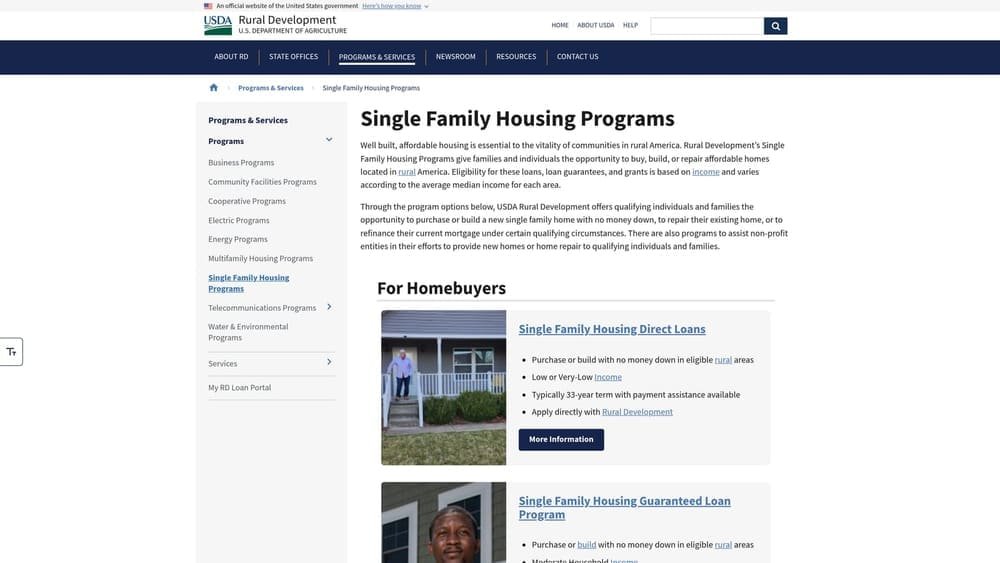
The USDA Rural Development Loan offers 100% financing — no down payment required — for buyers purchasing in eligible areas, backed by the U.S. Department of Agriculture.
Where This Tool Shines
USDA is frequently the most overlooked no-down-payment option because buyers assume “rural” means remote farmland. In practice, USDA-eligible areas often include suburban communities within commuting distance of major metros. Buyers in eligible zones across Virginia, Florida, Tennessee, and Georgia may qualify without realizing it. The USDA eligibility tool lets you check a specific address before assuming disqualification.
The annual mortgage insurance factor on USDA loans is lower than FHA’s, which affects long-term monthly cost. For income-qualifying buyers in eligible areas, USDA can produce a lower total monthly payment than FHA on a comparable purchase price. Explore USDA loan details at Mortgage Mastermind’s USDA resource page.
Key Features
100% Financing: No down payment required — one of only two federally backed programs (alongside VA) offering this.
Lower Annual Mortgage Insurance: USDA’s annual fee structure is generally lower than FHA’s annual MIP, reducing the ongoing monthly cost.
Property Eligibility Tool: USDA provides a public eligibility lookup tool — check your target address before assuming the program doesn’t apply.
Household Income Limits: Income limits apply and vary by area and household size — confirm current limits for your target county through the USDA eligibility portal.
Multi-State Availability: USDA-eligible zones exist across Virginia, Florida, Tennessee, and Georgia — all states where Mortgage Mastermind is licensed.
Best For
Buyers purchasing in USDA-eligible areas who meet household income limits and want to avoid both a down payment and higher FHA mortgage insurance costs. Strong for buyers who have ruled out VA (non-veteran) and want a true no-out-of-pocket closing path on eligible properties.
Pricing
No down payment. Upfront guarantee fee (currently 1% of loan amount, can be financed into the loan). Annual fee (currently 0.35% of outstanding balance). Verify current fee rates at USDA Rural Development before finalizing budget projections.
4. FHA Loan (Federal Housing Administration)
Best for: First-time buyers and credit-rebuilding buyers who need flexible qualification and plan to pair with a state DPA program.
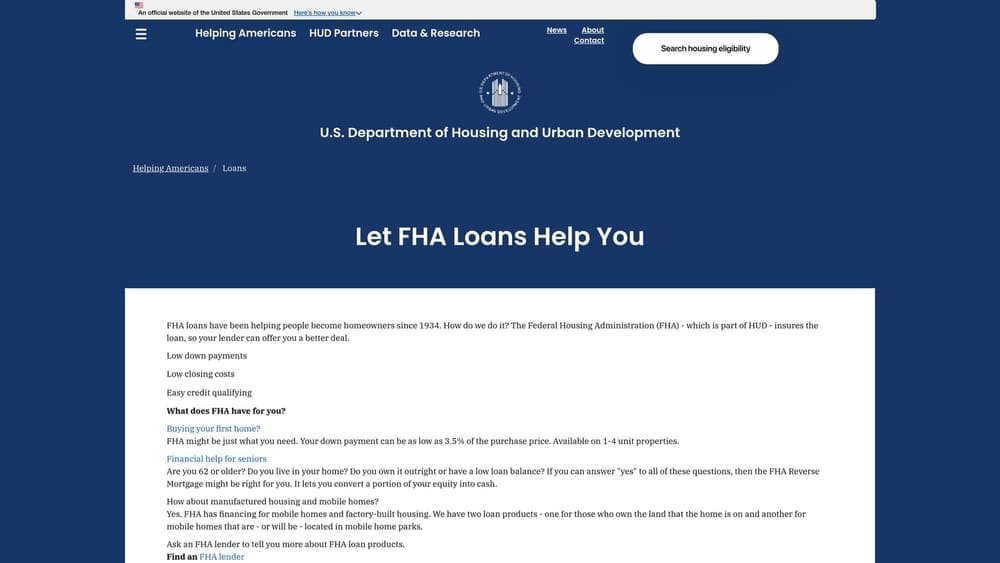
The FHA Loan is a HUD-backed mortgage program with a 3.5% minimum down payment and broader credit qualification standards than conventional programs — and it pairs with most state down payment assistance programs for a reduced or no-out-of-pocket closing path.
Where This Tool Shines
FHA’s real power for buyers who cannot afford a down payment is its compatibility with state DPA programs. The 3.5% minimum down payment can be covered entirely by gift funds or a state assistance program, bringing the buyer’s out-of-pocket requirement to zero in qualifying scenarios. That pairing is where FHA becomes a true no-cash-to-close solution rather than just a low-down option.
The credit flexibility also matters. FHA qualifies buyers at 580+ credit score for the 3.5% down option, which is a lower threshold than most conventional programs. For buyers who have rebuilt credit after a past financial event, FHA often opens doors that conventional programs cannot. Understand mortgage insurance costs in detail at Mortgage Mastermind’s mortgage insurance explainer.
Key Features
3.5% Minimum Down Payment: Required with a 580+ credit score; 10% down required for scores between 500-579.
Gift Funds Fully Allowed: The entire down payment can come from gift funds from an eligible donor — no buyer cash required for the down payment itself.
DPA Program Compatibility: FHA pairs with most state housing finance agency programs, enabling a path to no-out-of-pocket closing costs when DPA covers the down payment.
Flexible Credit Standards: Lower credit score threshold than conventional programs, making it accessible for buyers with recent credit challenges.
Mortgage Insurance Disclosure: MIP applies for the life of the loan if less than 10% down — a key long-term cost factor to weigh against conventional options for buyers who can qualify for both.
Best For
First-time buyers pairing with state DPA programs, buyers with 580-680 credit scores, and those using gift funds for the down payment. Also strong for buyers who want broad lender access through a broker to find the most competitive FHA rate across multiple wholesale lenders.
Pricing
3.5% minimum down payment. Upfront MIP: 1.75% of loan amount (can be financed). Annual MIP: varies by loan term, LTV, and loan amount. Consult HUD.gov or a broker for current MIP schedules.
5. Conventional 97 / HomeReady / Home Possible
Best for: Buyers with stronger credit profiles who want cancellable PMI and a lower long-term mortgage insurance cost than FHA.
Fannie Mae HomeReady, Freddie Mac Home Possible, and the Conventional 97 program each offer 3% minimum down payment options with private mortgage insurance that cancels once equity reaches 20% — a structural cost advantage over FHA for buyers who qualify.
Where This Tool Shines
The cancellable PMI is the defining advantage over FHA for buyers who can meet the credit and income requirements. On an FHA loan with less than 10% down, mortgage insurance runs for the life of the loan. On a conventional 97, PMI drops off once you reach 20% equity — through appreciation, additional payments, or a combination of both. For buyers who plan to stay in the home more than a few years, that difference in long-term cost can be significant.
HomeReady and Home Possible also have income-limit structures that can make them accessible to moderate-income buyers while offering better long-term economics than FHA for those with 700+ credit scores. The monthly PMI cost on conventional loans is typically lower than FHA’s MIP at that credit score range.
Key Features
3% Minimum Down Payment: All three programs allow 3% down, reducing the initial cash requirement compared to traditional 5-20% conventional expectations.
Cancellable PMI: Unlike FHA MIP on low-down loans, conventional PMI cancels automatically when equity reaches 20% — a meaningful long-term savings.
No Upfront Mortgage Insurance Premium: Unlike FHA’s 1.75% upfront MIP, conventional programs carry no upfront mortgage insurance cost.
Program Distinctions: HomeReady (Fannie Mae) and Home Possible (Freddie Mac) have income limits; Conventional 97 does not, but requires at least one borrower to be a first-time buyer.
Homebuyer Education: HomeReady and Home Possible require completion of an approved homebuyer education course — a reasonable requirement that also helps buyers understand the process.
Best For
Buyers with 680+ credit scores who want to minimize long-term mortgage insurance costs, and those who expect to build equity over time and want PMI to eventually disappear. Also strong for buyers who don’t qualify for VA or USDA and want a conventional path with minimal upfront cash.
Pricing
3% down minimum. No upfront MIP. PMI rate varies by credit score and LTV — typically lower monthly cost than FHA MIP for buyers with 700+ credit scores. PMI cancels at 20% equity.
6. State Down Payment Assistance Programs (VA, FL, TN, GA)
Best for: Income-qualifying buyers who need help covering the down payment or closing costs and are purchasing a primary residence in one of Mortgage Mastermind’s licensed states.
State housing finance agency programs offer grants, forgivable second liens, and deferred second mortgages to help income-qualifying buyers bridge the gap between what they have saved and what a program requires at closing.
Where This Tool Shines
State DPA programs are the mechanism that turns an FHA loan’s 3.5% down requirement into a true no-out-of-pocket closing path for qualifying buyers. When a state program covers the down payment and the seller concessions cover closing costs, the buyer’s cash-to-close can approach zero. That’s the scenario many buyers don’t realize is achievable through proper program layering.
Each state administers programs differently, and program terms change annually. Working with a broker who actively places loans through these programs — rather than a direct lender who may not participate in all of them — ensures you’re seeing current options rather than outdated information.
Key Features
Four-State Coverage: Programs available through VHDA (Virginia), Florida Housing Finance Corporation (Florida), THDA (Tennessee), and Georgia Dream (Georgia) — all states where Mortgage Mastermind is licensed.
Program Structure Variety: Options include forgivable grants (no repayment after required occupancy), deferred second liens (repaid at sale or refinance), and low-interest second mortgages.
First Mortgage Pairing: Most DPA programs pair with FHA or conventional first mortgages — the combination is how buyers reach a no-out-of-pocket closing path.
Income and Purchase Price Limits: Program eligibility is based on household income and purchase price limits that vary by state and program year — confirm current limits with your state housing agency or a broker who works with DPA programs.
Homebuyer Education: Many programs require completion of an approved homebuyer education course as a condition of assistance.
Best For
Income-qualifying buyers purchasing a primary residence in Virginia, Florida, Tennessee, or Georgia who need help with the down payment, closing costs, or both. Particularly effective when paired with FHA or conventional 97 as the first mortgage. Note: program terms change; always verify current availability with a broker or your state housing agency.
Pricing
Varies by state and program. Forgivable grants require no repayment after the occupancy period. Deferred second liens are typically repaid at sale or refinance. Check current program details with your state housing agency or a broker who actively works with DPA programs in your state.
7. Seller Concessions
Best for: Buyers who have the down payment covered but need help with closing costs, or those combining concessions with DPA for a comprehensive no-out-of-pocket strategy.
Seller concessions are a negotiation strategy — not a loan program — where the seller agrees to contribute toward the buyer’s closing costs as part of the purchase agreement, reducing total cash needed at closing without increasing the loan amount beyond the purchase price.
Where This Tool Shines
Seller concessions work best as part of a layered strategy. A buyer using FHA with a state DPA program covering the down payment can negotiate seller concessions to cover closing costs — creating a scenario where total out-of-pocket cash approaches zero. The key is that concessions don’t require a separate application; they’re negotiated in the purchase offer itself.
The limits vary by loan type, and understanding those limits matters when structuring an offer. A broker can advise on how to frame the offer to maximize seller contribution within program guidelines without creating issues during underwriting.
Key Features
VA Loans: The seller can cover all closing costs plus up to 4% in additional concessions — the most generous seller contribution allowance of any program type.
FHA Loans: Seller can contribute up to 6% of the purchase price toward the buyer’s closing costs and prepaid items.
Conventional Loans: Seller contribution limits vary by LTV: 3% at greater than 90% LTV, 6% at 75-90% LTV, 9% at 75% LTV or below.
No Separate Application Required: Concessions are negotiated as part of the purchase offer — no additional program enrollment or approval process needed.
Market-Dependent Effectiveness: Concessions are most achievable in markets where sellers have flexibility; a broker can advise on realistic expectations given current market conditions in your area.
Best For
Buyers who have down payment covered (via VA, USDA, DPA, or gift funds) and need closing cost assistance. Also effective as a complement to any low-down-payment program where closing costs represent the remaining gap to a no-out-of-pocket closing.
Pricing
No cost to the buyer as a strategy. Effectiveness depends on market conditions and negotiation. A mortgage broker can advise on how to structure an offer to maximize seller contribution within program limits without compromising offer competitiveness.
8. Gift Funds for Down Payment
Best for: Buyers with family members willing to contribute toward the purchase who need a documented, compliant path to using those funds.
Gift funds are documented financial contributions from eligible donors — typically family members — that can be used toward the down payment and closing costs on FHA, VA, USDA, and most conventional loans, provided the documentation requirements are met correctly.
Where This Tool Shines
Gift funds are often the simplest path to a no-out-of-pocket down payment for buyers who have family willing to help. The challenge isn’t the concept — it’s the documentation. Lenders require a signed gift letter, donor bank statements showing availability of funds, and transfer documentation. Errors or gaps in the paper trail can cause underwriting delays or, in worst cases, derail a closing.
Working with an experienced broker who knows exactly what underwriters require — before the file is submitted — prevents the most common gift fund problems. The documentation process is administrative, but it needs to be done correctly the first time.
Key Features
FHA Flexibility: On FHA loans, 100% of the down payment can come from gift funds from an eligible donor — no buyer cash required for the down payment itself.
VA and USDA Compatibility: Gift funds are permitted on both VA and USDA loans with proper documentation, complementing their zero-down-payment structures.
Conventional Requirements: Gift funds are allowed on conventional loans; for low-down conventional loans, the donor must be a family member as defined by agency guidelines.
Required Documentation: A signed gift letter stating no repayment is expected, donor bank statements showing fund availability, and transfer documentation confirming the funds moved to the buyer.
No Repayment Allowed: Gift funds cannot be a disguised loan. Any expectation of repayment disqualifies the funds under lending guidelines — the gift letter must explicitly state this.
Best For
Buyers with family members willing and able to contribute toward the purchase, particularly those using FHA where gift funds can cover the entire down payment. Also useful as a complement to state DPA programs when closing costs need additional coverage beyond what the assistance program provides.
Pricing
No cost as a strategy. Documentation requirements are administrative. Improper documentation is the primary risk — an experienced broker ensures the paper trail is complete and correct before the file reaches underwriting.
Which Path Is Right for Your Situation
The right solution depends on your buyer profile, not a one-size-fits-all recommendation. Here’s how to think about it:
Veterans and active-duty service members: The VA loan is the starting point. No down payment, no PMI, and competitive wholesale rates through a broker who can shop multiple VA lenders. Explore your VA eligibility at Mortgage Mastermind’s VA loan resource before considering any other program.
Buyers in eligible rural or suburban areas: Check USDA eligibility first. If your target property qualifies, USDA offers 100% financing with a lower annual mortgage insurance cost than FHA — a strong combination for income-qualifying buyers.
Buyers rebuilding credit or using gift funds: FHA paired with a state DPA program is the most common path to a no-out-of-pocket closing for non-veterans. The 3.5% down requirement can be covered by gift funds or a state assistance program, and seller concessions can address closing costs.
Buyers with stronger credit profiles: Conventional 97 or HomeReady offers a 3% down path with cancellable PMI — a better long-term cost structure than FHA for buyers with 700+ credit scores who expect to build equity over time.
The broker-independence advantage applies across all of these paths. A single-shelf lender can only offer what’s on their own product menu. An independent broker can evaluate VA, USDA, FHA with DPA, and conventional options simultaneously — and layer solutions where appropriate. That’s the structural difference for buyers who need to combine programs to reach a no-out-of-pocket closing. Learn more about no-down-payment home loan options and what may apply to your situation.
If you’ve been stuck in a rental cycle wondering whether homeownership is actually within reach, the programs in this guide exist precisely for that situation. The rental cycle solution is often one consultation away from becoming clear.
Schedule your no-pressure consultation today with Duane Buziak and the Mortgage Mastermind team. The credit-safe inquiry process means you can explore all of these options without a hard credit pull — and walk away with a clear picture of which programs apply to your specific situation, in whichever licensed state you’re purchasing.
